
Erie County Criminal Court Cases
Erie County uses two court levels for most local criminal cases. Magisterial District Judges receive complaints, conduct preliminary arraignments, address bail, hold preliminary hearings, and decide summary or traffic matters. A felony or misdemeanor that is held for court moves to the Erie County Court of Common Pleas, the Sixth Judicial District's general-jurisdiction trial court. Erie and Corry do not operate separate municipal criminal courts. Their cases use the assigned district judge and the county court system.
The Erie County Clerk of Courts keeps adult Common Pleas criminal filings. That file can include the formal information filed by the District Attorney, motions, pleas, hearing entries, orders, verdicts, sentences, and appeals. The Sheriff, prison, and police do not hold this court file. A police agency owns its incident report, and the prison owns booking facts. The court docket is the source for what charges were filed and how each count ended.
Erie County Docket Numbers Decoded
A docket number tells a reader which court record is open. Common Pleas criminal cases use the county code 25 in the form CP-25-CR-[number]-[year]. District court dockets begin with MJ- and add the district office and case identifiers. The MDJ record captures the early stage. Once charges move on, the Common Pleas docket can cross-reference that origin and the arresting agency.
- Held for court
- The district judge found that charges should proceed to Common Pleas. It is not a conviction.
- Waived for court
- The preliminary hearing was waived. No admission of guilt follows from the waiver alone.
- Information
- The formal charging document that the Erie County District Attorney files in Common Pleas.
- Nolle prosequi
- A charge ended by the prosecution with court approval, without a conviction on that count.
These labels connect the two court levels without turning an early Erie County court event into a final result.
Searching Erie County Case Records
The free Unified Judicial System Case Search covers public Common Pleas and Magisterial District Court dockets. A full docket number is the cleanest key. A participant-name search works when the number is unknown, but first name, filing range, and a displayed birth date can help separate people with similar names. Public users can open docket-sheet reports without an account. Secure users have added products that the public search does not expose.
- Open Case Search and choose either Court of Common Pleas or Magisterial District Court.
- Select the criminal category and Erie County.
- Enter the full docket number, or use participant name with lawful narrowing fields.
- Open the docket sheet and read each charge, event, and disposition instead of relying on the caption.
- For filed documents, certification, transcripts, or older material, give the full number to the Clerk or the assigned MDJ.
| Field | Control | Required | Use |
|---|---|---|---|
| Search Type | Tab or dropdown | Yes | Docket, participant, organization, or available SID search |
| Court Type | Dropdown | Yes | Choose Common Pleas or Magisterial District Court |
| Case Category | Dropdown | Conditional | Choose the criminal category for the selected court |
| County | Dropdown | Conditional | Select Erie for local results |
| Docket Number | Structured text | Conditional | Use the full CP-25-CR or MJ format when known |
| Participant Name | Text | Conditional | Last name is central; first name narrows matches |
| DOB and Filed Dates | Date fields | Optional | Limit broad name results when the portal displays them |
| Case Status | Dropdown | Optional | Use the active or inactive choices the portal supplies |
The official Erie County case-search screen shows how these controls fit together.
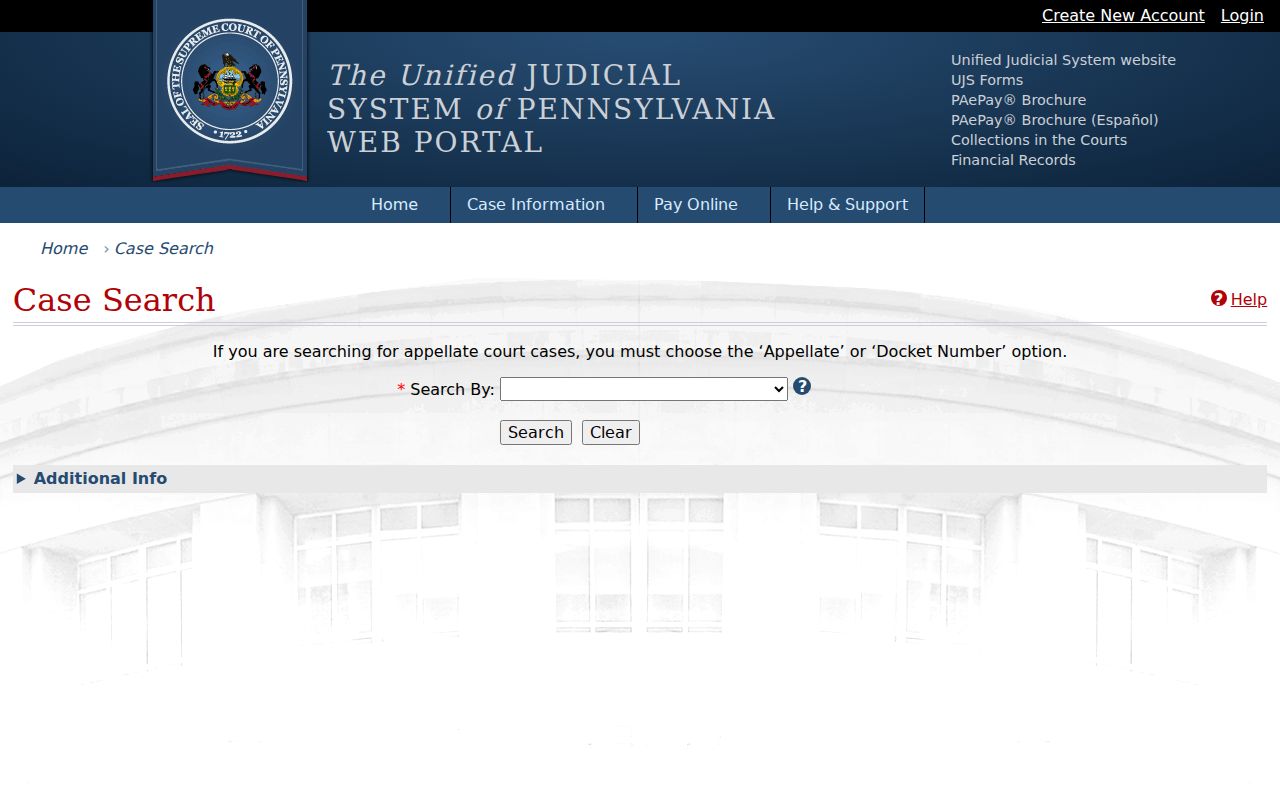
The screen is the starting point for a public docket, not a substitute for the filed papers at the clerk's counter.
Erie County Room 103 Case Search
When the web sheet is not enough, the Erie County Clerk of Courts is the practical next stop. The criminal counter is in Room 103 of the Erie County Courthouse, 140 West Sixth Street, Erie, PA 16501. It is open weekdays from 8:00 a.m. to 4:30 p.m. The office can be reached at 814-451-6221 or clerksrequests@eriecountypa.gov. Its published adult criminal-record search costs $10.
Ask the clerk about motions, attachments, transcripts, certification, and older Common Pleas records that do not appear as downloadable images. For a paper MDJ record, contact the assigned district office instead. Rule 509 issues involving complex judicial-record requests go to the Court Records Manager in Room 210 at 814-451-6295 or Rule509Adm@eriecountypa.gov. Using the docket number in the first call saves time and helps staff locate the exact Erie County case.
The Clerk's official criminal-record service page displays the local forms and office path.
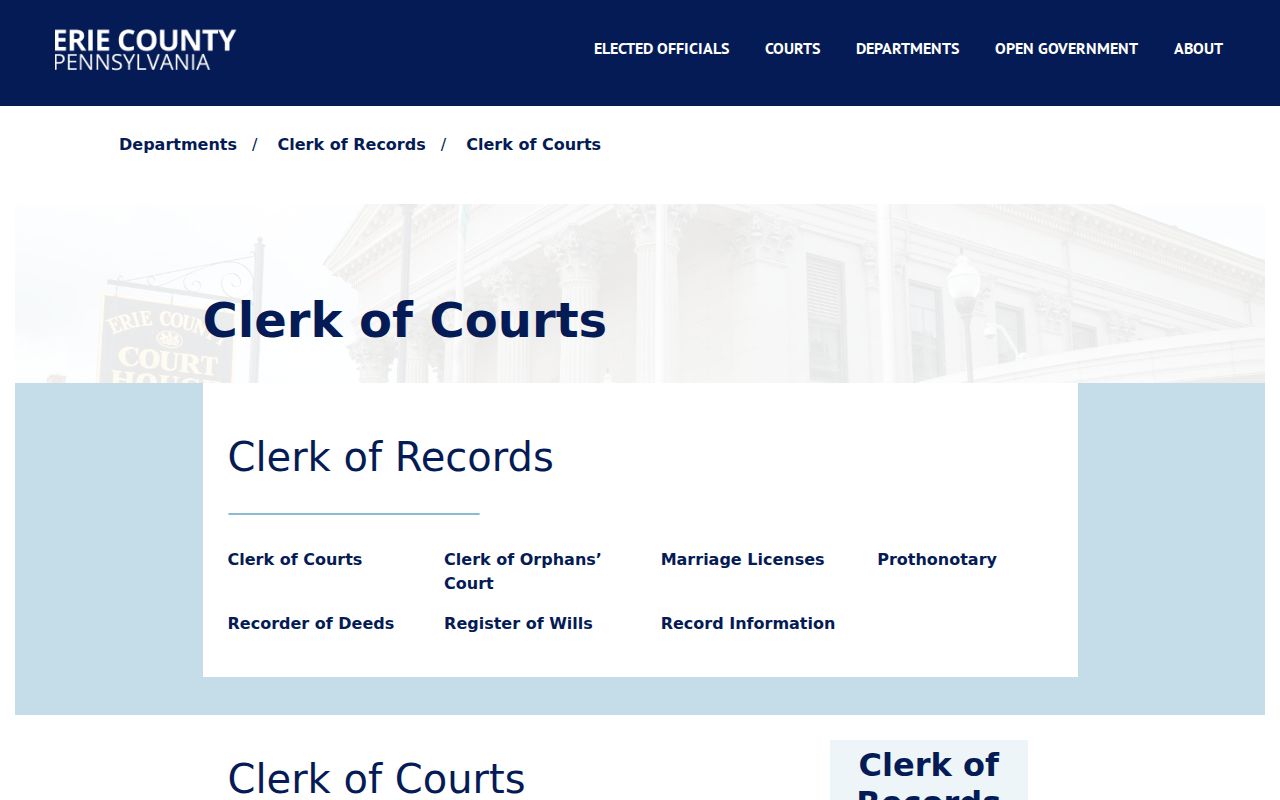
That local service fills the gap between a free summary docket and the documents maintained in the Common Pleas file.
Inside an Erie County Case File
A criminal case file is read count by count. The case caption may stay the same even when one charge is dismissed and another leads to a plea. Dates also matter. The filing date, hearing dates, and docket-entry list show the order of court action. A booking charge can differ from the information later filed by the District Attorney, so the latest court disposition should control any account of the outcome.
| Docket and Court | CP-25-CR or MJ identifier, court, filing date, and case status. |
|---|---|
| Participants | Caption, party role, counsel, and representation status shown to the public. |
| Charges | Count, statute, subsection, description, grade, offense date, and count-level result. |
| Bail | Type, amount or percentage, posting status, and court action dates. |
| Events and Entries | Arraignment, conference, plea, trial, sentencing, motions, orders, and notices. |
| Disposition and Sentence | Guilty, dismissed, withdrawn, nolle prossed, acquitted, or other outcome, plus entered terms. |
| Financial Record | Public costs, fines, restitution, fees, payments, and balance where available. |
| Redactions | Protected identifiers, victim or minor data, sealed items, and restricted filings are omitted. |
Underlying images may require a separate request even when this docket inventory is visible online.
Read Erie County Charges Count by Count
Several common labels are easy to misread. A withdrawn or dismissed count is not a conviction. An acquittal is a not-guilty verdict. A guilty plea or verdict is a conviction, but the sentence must be read in its own entry. The grade abbreviations F1, F2, F3, M1, M2, and M3 describe offense levels, not outcomes. An F2 charge can still be dismissed.
Compare the charge table with the chronological entries and sentence block. A plea agreement may resolve some counts while others end without guilt. The public docket may also lag a new filing or a recent correction. For deeper county-wide context about repository and court records, the Erie County criminal history overview explains why the sources can disagree.
Note: A case-level status never replaces the separate disposition shown for each charge on an Erie County docket.
How a Criminal Case Moves
An Erie County criminal matter starts with a complaint at the MDJ level. The judge addresses rights and bail at preliminary arraignment, then holds or accepts a waiver of the preliminary hearing. If charges proceed, the District Attorney files an information in Common Pleas. Formal arraignment and pretrial work follow. The matter can end through a plea, trial, withdrawal, dismissal, or other court action. A conviction then leads to sentencing and may produce post-sentence motions or an appeal.
Case flow: Charges Filed › Arraignment › Pretrial › Plea or Trial › Disposition › Sentencing
This flow explains why a new Erie County arrest may show first on an MJ docket and later appear under a CP-25-CR number.
Erie County Court Files May Not Download
The public UJS sheet is an index and case summary. It does not promise a downloadable image of every complaint, motion, exhibit, transcript, or order. Public users also lack secure products such as Case Accounting and Pre-Sentence Summary reports. A missing image therefore does not mean the underlying document does not exist.
The UJS public docket options page distinguishes open docket information from secure court access.
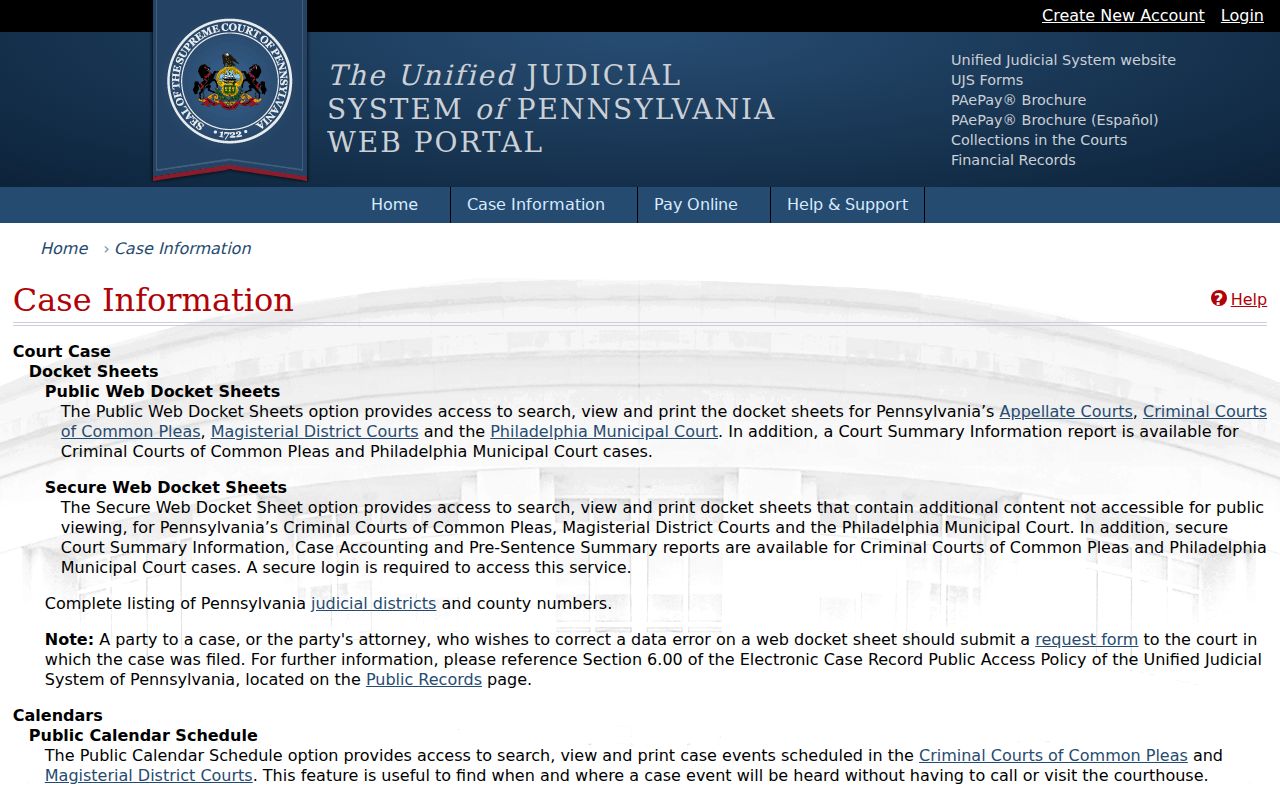
Use that distinction to decide whether the web docket answers the question or a request to Room 103 is still needed.
Erie County Veterans Court Case Path
Erie County's Veterans Treatment Court offers a named alternative for eligible veterans. The Sixth Judicial District describes it as a collaborative program intended to keep qualified participants out of jail while addressing treatment and supervision needs. Applications are available through Court Administration, the District Attorney, or the Public Defender. Participation does not erase the need to read the docket. Program events, dispositions, and later orders remain matters of court procedure and public access rules.
The Erie County Public Defender page identifies the defense office that may assist eligible people facing loss of liberty.
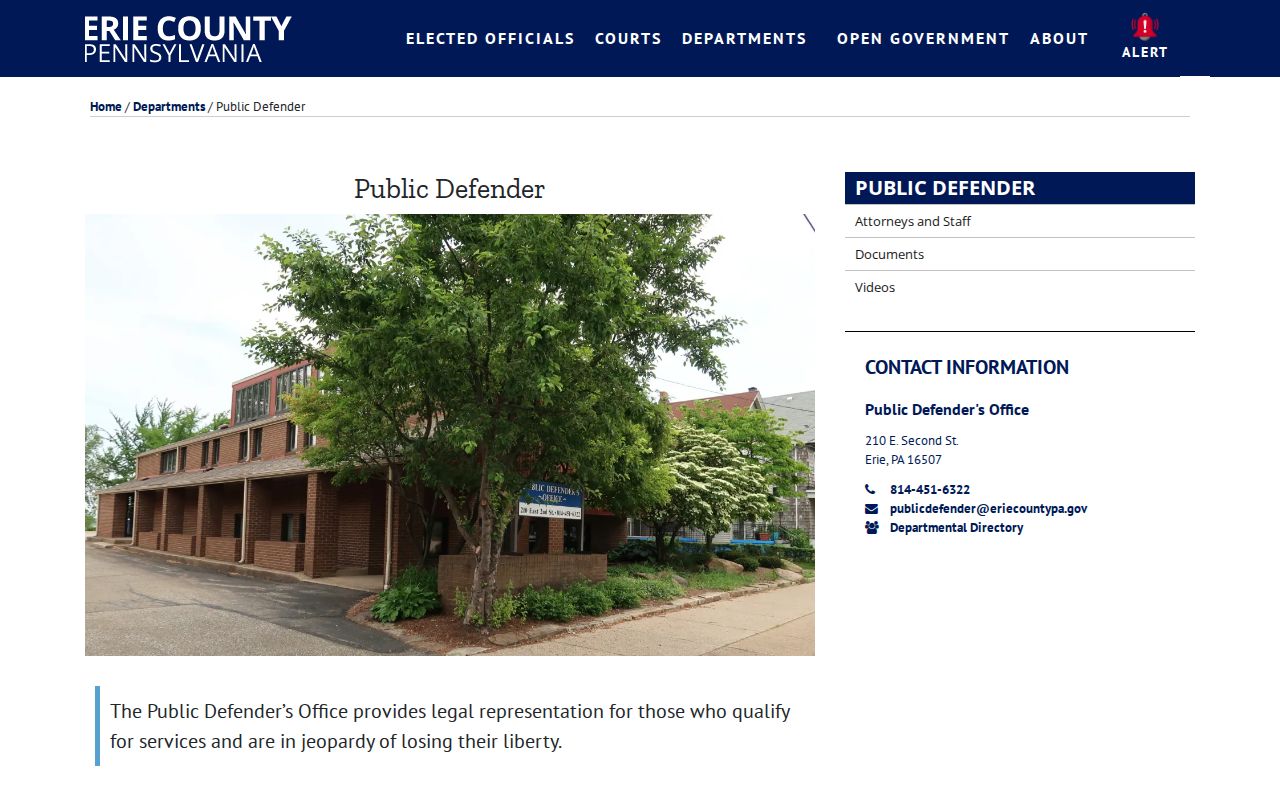
The office is part of a case, but it is not the custodian for a public criminal-record search.
Case Record Access and Restrictions
Pennsylvania court access is governed by Pa.R.J.A. 509 and the UJS Case Records Public Access Policy. Public docket sheets omit full Social Security numbers, protected addresses, victim and minor data, and restricted filings. Juvenile files, sealed cases, and records subject to limited-access orders follow tighter rules. A person who cannot find an expected Erie County case should confirm the court level, spelling, filing range, and docket number before assuming the file is gone.
For an error in the online docket, a party or attorney can use the official correction route to the filing court. For older material, contact the Clerk or assigned MDJ. Judicial records follow court rules, while a city police report follows the request rules of the agency that created it. The Pennsylvania Right-to-Know Law is not a way to bypass these court controls.
Access rule: A free docket is informational. Pennsylvania courts state that it does not replace a Pennsylvania State Police criminal-history check.